Every 6 seconds, a dog owner in America searches "why is my dog vomiting blood." Right now, thousands of dogs are suffering from digestive emergencies that could have been prevented—or caught earlier.
If you've ever stepped into a puddle of vomit at 3 AM, watched your dog strain with bloody diarrhea, or felt that gut-wrenching panic wondering "Is this serious?"—you're not alone.
78% of dog owners wait too long to act when their pet shows digestive distress. By the time they reach the vet, it's often too late.

A dog showing signs of digestive distress needs immediate attention
Why Dogs Suffer From Digestive Emergencies
Your dog's digestive system is a complex highway—from mouth to stomach, through the intestines, and finally out. When something goes wrong anywhere along this path, the results can be catastrophic.
- Parvovirus – Kills 91% of untreated puppies within 48-72 hours
- Intestinal obstruction – Foreign objects can rupture the gut
- Pancreatitis – Often triggered by fatty foods
- Poisoning – Chocolate, xylitol, rat poison
- Gastric torsion (bloat) – Can kill a dog in under an hour
The Hidden Culprit Most Vets Won't Tell You About
Here's what's alarming: most digestive emergencies start with an unhealthy gut microbiome.
When your dog's gut bacteria are out of balance, their entire digestive system becomes vulnerable. The protective barrier weakens. Harmful bacteria multiply. And suddenly, something as simple as a new treat can trigger a life-threatening crisis.
💡 Did you know? Thousands of dog owners are now protecting their pets with Pawbiotix—a veterinarian-formulated probiotic that strengthens gut health before emergencies happen.
Dog Vomiting: What Every Color Means
Not all vomit is created equal. The color and consistency of your dog's vomit can tell you whether you have minutes to act—or hours.
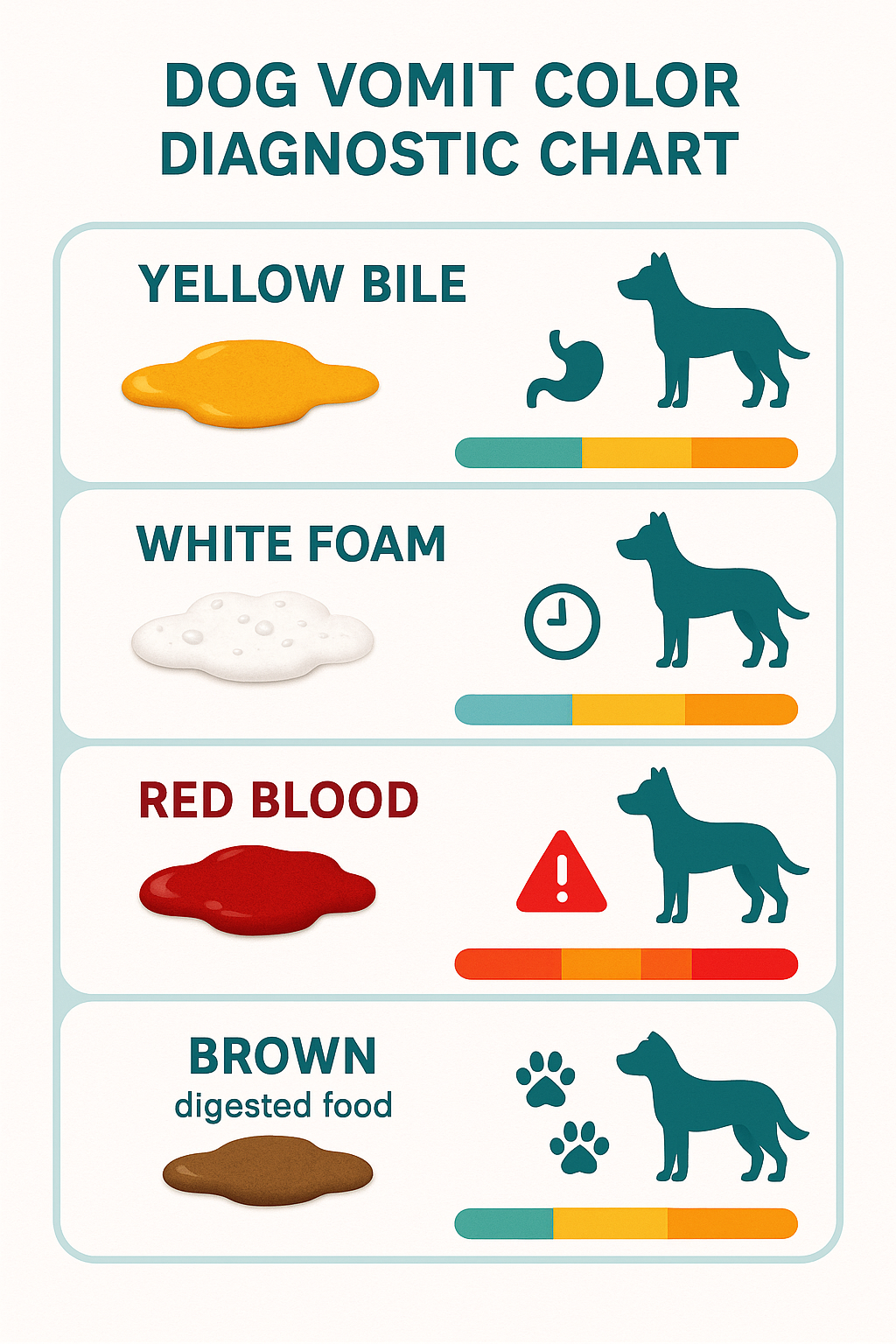
Yellow Vomit (Bile)
What it means: Empty stomach, bile reflux, or early gastritis.
When to worry: If it happens repeatedly, especially with lethargy or loss of appetite.
White Foamy Vomit
What it means: Stomach irritation, empty stomach, or possible respiratory issues.
When to worry: Frequent episodes with coughing or difficulty breathing.
Vomit With Blood
What it means: Internal bleeding, ulcers, poisoning, or severe trauma.
⚠️ RED ALERT: GO TO THE EMERGENCY VET IMMEDIATELY.
Undigested Food
What it means: Eating too fast, possible obstruction, or stomach motility issues.
When to worry: If it happens frequently or your dog seems in pain.
Dogs and Diarrhea: The Deadly Spectrum
Diarrhea in dogs ranges from "no big deal" to "life-threatening emergency" faster than most owners realize.
Acute vs. Chronic Diarrhea
| Type | Duration | Common Causes | Urgency |
|---|---|---|---|
| Acute | Hours to days | Diet change, stress, infection | Monitor closely |
| Chronic | Weeks+ | IBD, allergies, parasites | Vet visit required |
The Color Code for Dog Diarrhea
- Brown: Usually normal
- Yellow: Rapid transit, possible liver issues
- Green: Grass ingestion or infection
- Black/Tarry: EMERGENCY – Digested blood (melena)
- Red streaks: Fresh blood from colon/rectum
Both vomiting and diarrhea cause rapid fluid loss. In puppies and small dogs, severe dehydration can occur within hours.
Check for these warning signs:
- Dry, sticky gums
- Sunken eyes
- Skin that doesn't snap back when pinched
- Weakness and rapid breathing
🛡️ Protect Your Dog's Gut Health Today
A healthy gut is your dog's first line of defense against dehydration-causing digestive issues.
Discover Pawbiotix →Dog Pooping Blood: When Every Second Counts
Seeing blood in your dog's stool is one of the most terrifying experiences for any pet owner. Here's how to know if you're facing an emergency.
Two Types of Bloody Stool
Hematochezia (Bright Red Blood)
- Source: Lower GI tract (colon, rectum)
- Appearance: Streaks or drops on stool
- Causes: Colitis, parasites, anal gland issues
Melena (Black, Tarry Stool)
- Source: Upper GI tract (stomach, small intestine)
- Appearance: Dark, sticky, tar-like
- Causes: Ulcers, severe disease, poisoning
In puppies, ANY blood in stool should be treated as an emergency until proven otherwise. Parvovirus can kill within 48 hours, and bloody diarrhea is often the first sign.
The 5 Deadliest Digestive Diseases in Dogs
1. Parvovirus (Parvo)
Symptoms:
- Severe, foul-smelling bloody diarrhea
- Projectile vomiting
- Extreme lethargy
- Rapid dehydration
Who's at risk: Unvaccinated puppies under 6 months
2. Pancreatitis
Trigger: Fatty foods, table scraps
Symptoms: Repeated vomiting, hunched posture, loss of appetite, fever
3. Intestinal Obstruction
Cause: Swallowed toys, socks, bones, string
Symptoms: Vomiting after eating, no bowel movements, painful swollen abdomen
Treatment: Often requires emergency surgery
4. Giardia
Source: Contaminated water, infected feces
Symptoms: Intermittent diarrhea with mucus, foul-smelling stool, weight loss
5. Toxic Ingestion
Common culprits: Chocolate, xylitol (sugar-free products), grapes/raisins, rat poison, certain plants
Emergency Checklist: Should You Rush to the Vet?
🚨 GO TO THE VET IMMEDIATELY IF:
✅ YOU MAY MONITOR AT HOME IF:
Prevention: The Smart Owner's Secret Weapon
The best emergency is the one that never happens. Here's how to protect your dog:
Diet Stability
- Change foods gradually over 7-10 days
- Limit fatty table scraps (pancreatitis trigger)
- Keep treats under 10% of daily calories
Environmental Safety
- No drinking from puddles or stagnant water
- Keep garbage secured
- Dog-proof your home for small objects
Gut Health Optimization
This is where most owners fail—and where you can succeed.
A strong gut microbiome acts as your dog's internal shield against harmful bacteria, parasites, inflammatory responses, and digestive distress.

